Bluestacks Oh No! Your Login Temporarily Failed
In Android, rooting is a process to gain authoritative privileges on the phone and have admission to the Android system files. This allows the user to perform dissimilar operations (that a normal user cannot like changing the boot animation etc.) and install applications that require root access (similar Wi-Fi sniffer). As i of the pinnacle Android Emulators, at that place is always a requirement from some advanced users to root the BlueStacks awarding.

In that location can exist many methods both, automated or manual to root BlueStacks, but nosotros will endeavor to employ a simple arroyo and so that a common user can follow the instructions.
Warning:
Proceed at your own adventure as rooting BlueStacks tin can cause it to go unstable and it may fail to launch. Also, it may harm information or your system. Moreover, in some cases, tertiary-party applications are used, which are generally condom but may harm your organization/data. Additionally, rooted BlueStacks can be used for some illegal activities, and so, continue with extreme circumspection and stay within the legal boundaries.
Create a New BlueStacks Instance
Every bit you are going to try to root the BlueStacks, this comes with some risks, and trying it on a BlueStacks installation that has some essential information on it, may render the installation useless. In such a case, creating a new BlueStacks instance in the BlueStacks Multi-instance Manager volition exist a condom approach.
- Launch the BlueStacks Multi-Instance Manager and click New Case (near the bottom right).
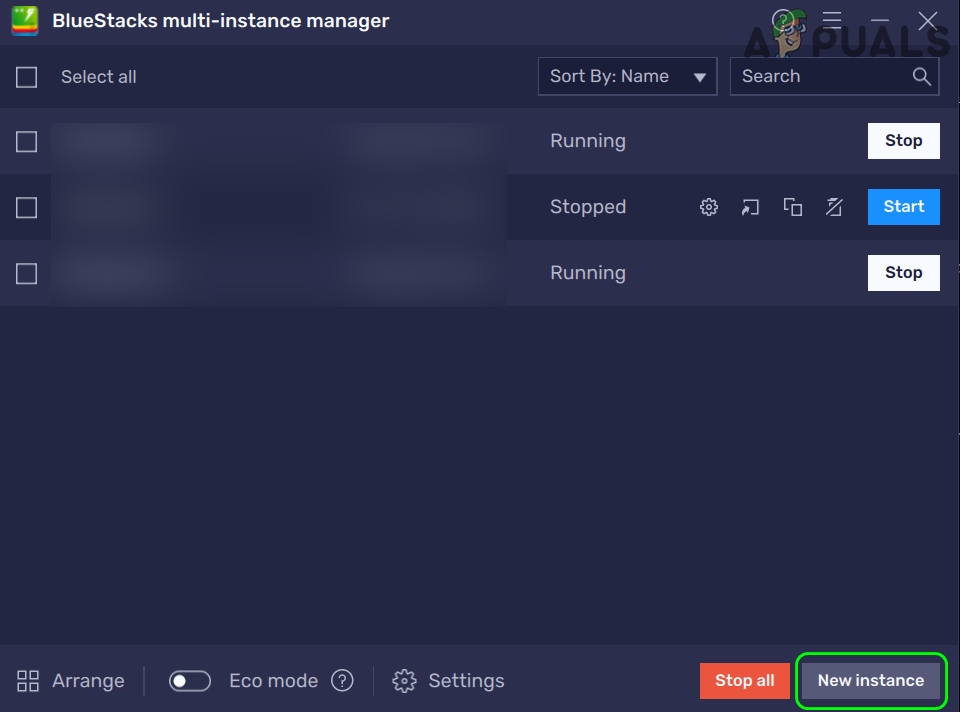
Click on New Case in BlueStacks Multi-Instance Manager - At present select Fresh Instance and cull an Android version just information technology will be better to select Nougat 32-fleck (the default BlueStacks installation at the time of writing this commodity).
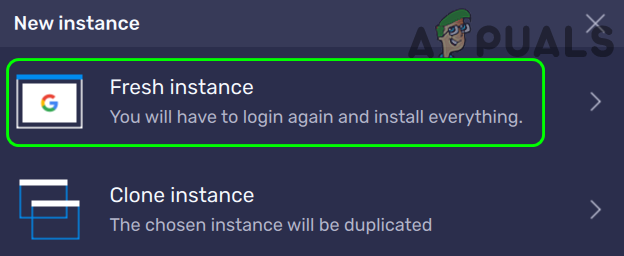
Select Fresh Case in the BlueStacks New Case Window - Then click Next and set the CPU Cores dropdown box to at least Medium (ii Cores).
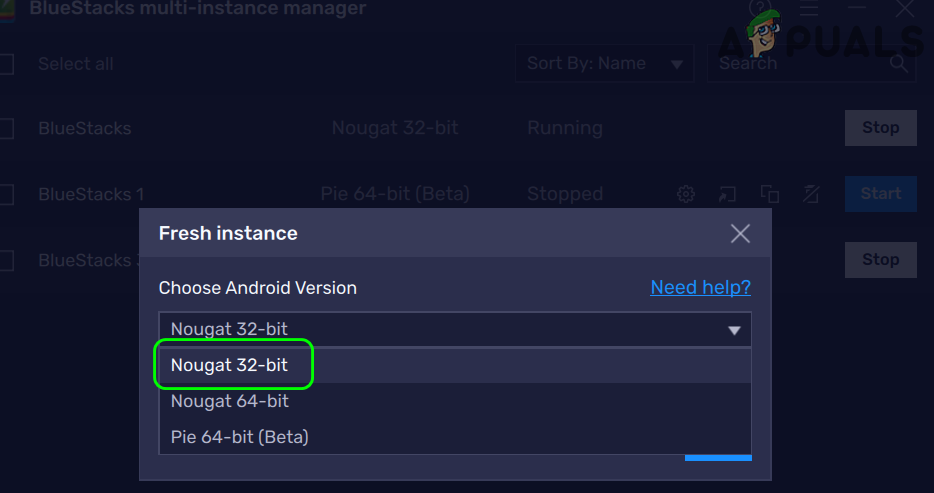
Select the Android Version of Nougat 32-Bit in the BlueStacks Fresh Instance Window - Now set the RAM dropdown to Medium 2GB and leave other options on the default values.
- And so click on the Create push and await till the BlueStacks instance is created.
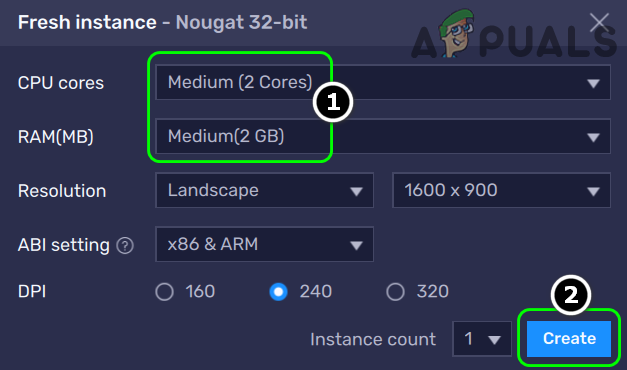
Create a New BlueStacks Instance with 2 Cores and 2 GB RAM - Now in the Multi-Instance Manager, select the newly created case and click on Starting time.
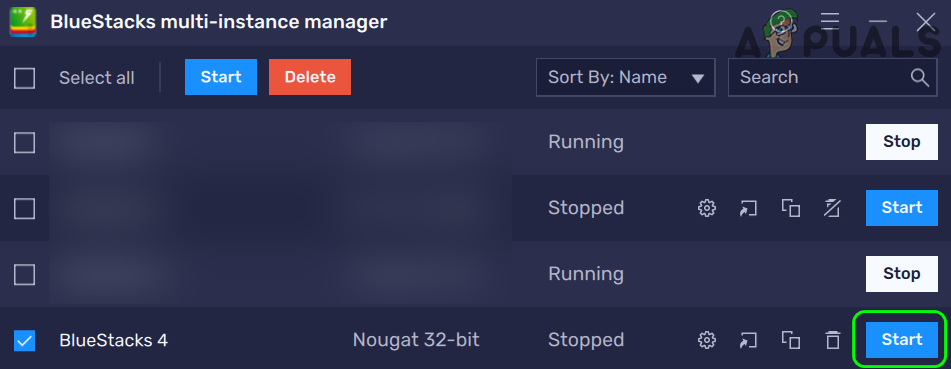
Start the Newly Created BlueStacks Instance from the BlueStacks Multi-Case Manager - And then, sign into the Play Store and then you can go ahead with the rooting process every bit discussed beneath.
Install a Root Checking Application from the Google Play Shop
Whichever method is used to Root BlueStacks, y'all may need a root checking app to ostend if the process was successful.
- Launch the Google Play Store in BlueStacks and search for Root Check.
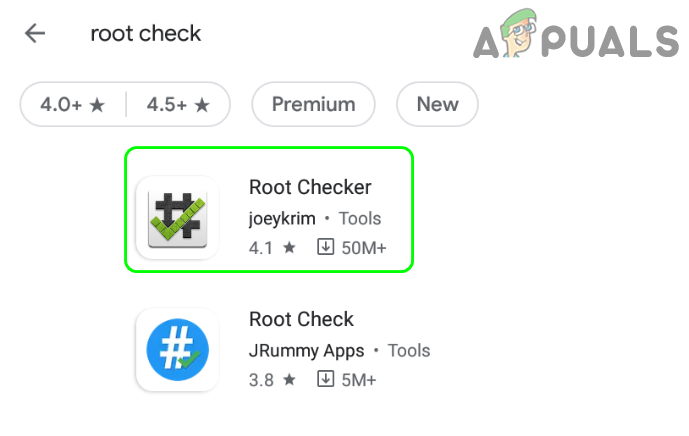
Install Root Checker from the Google Play Store - Now open Root Checker (or any other application of your pick) and click Install.
- Then launch Root Checker and click on Agree (if you accept the T&Cs).
- Now click on Get Started and under Verify Root Condition, click on Verify Root.
- Then you will exist shown that the device is not rooted. Do non worry, when the BlueStacks installation is rooted, information technology will say the device is rooted.
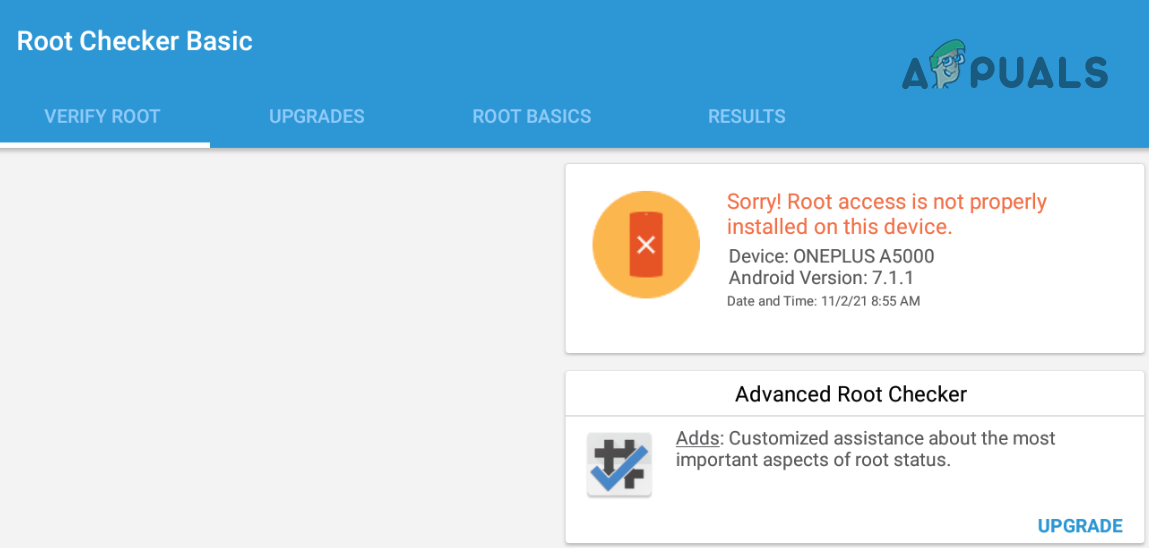
The Root is Non Properly Installed
Method 1: Root BlueStacks by Editing its Configuration File
This method is probably the easiest one equally nothing has to be downloaded and installed. Besides, the user will be using the tools he is quite familiar with.
- Firstly, close BlueStacks, and in case of a version less than 5, make sure to get out BlueStacks from the system's tray.
- Then right-click Windows and select Run.
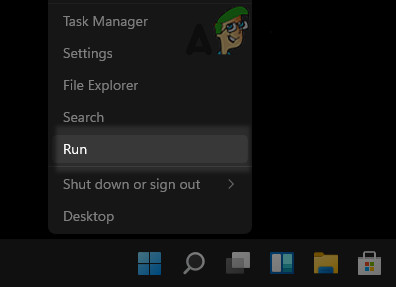
Open the Run Control Box from the Quick Admission Menu - At present navigate to the installation path of BlueStacks, ordinarily, the following (some users might have to enable viewing of hidden and protected operating system files):
%programdata%
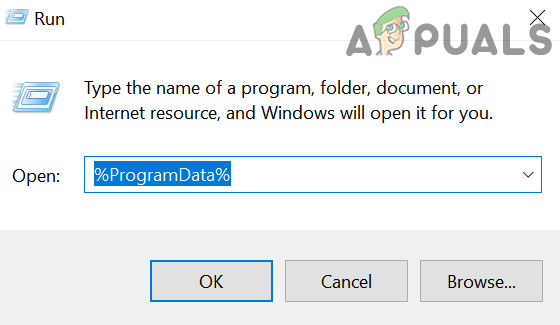
Open up the ProgramData Binder Through the Run Command Box - Now open the BlueStacks or BlueStacks_nxt folder and right-click on the Bluestacks.config file.
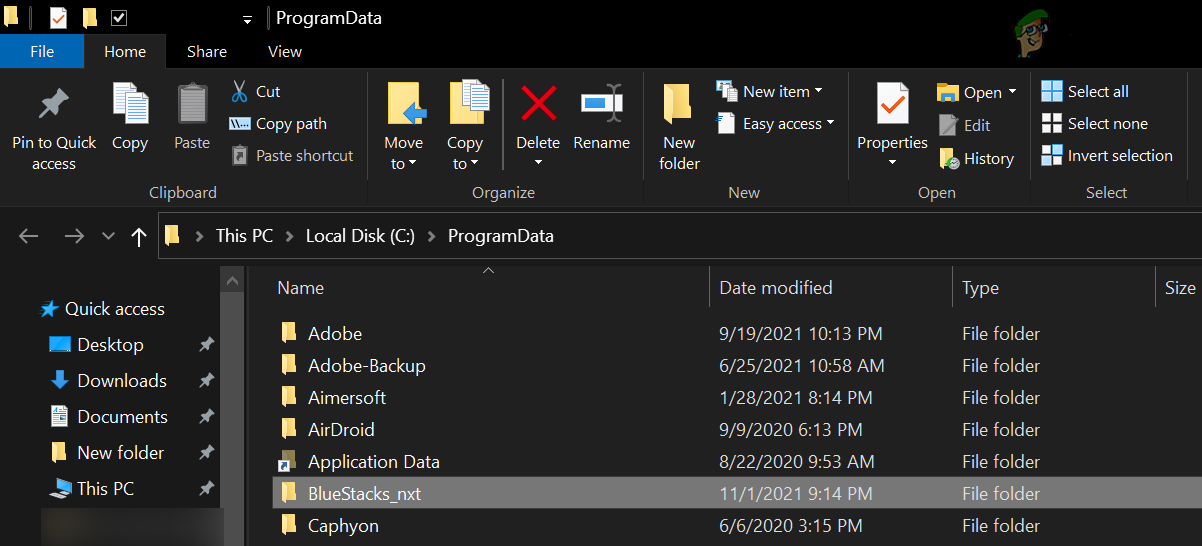
Open up the BlueStacks_NXT Folder in the ProgramData Directory - Then select Open up With and expand More than Apps.
- Now select Notepad and when the Notepad window is shown, aggrandize Edit and select Find.
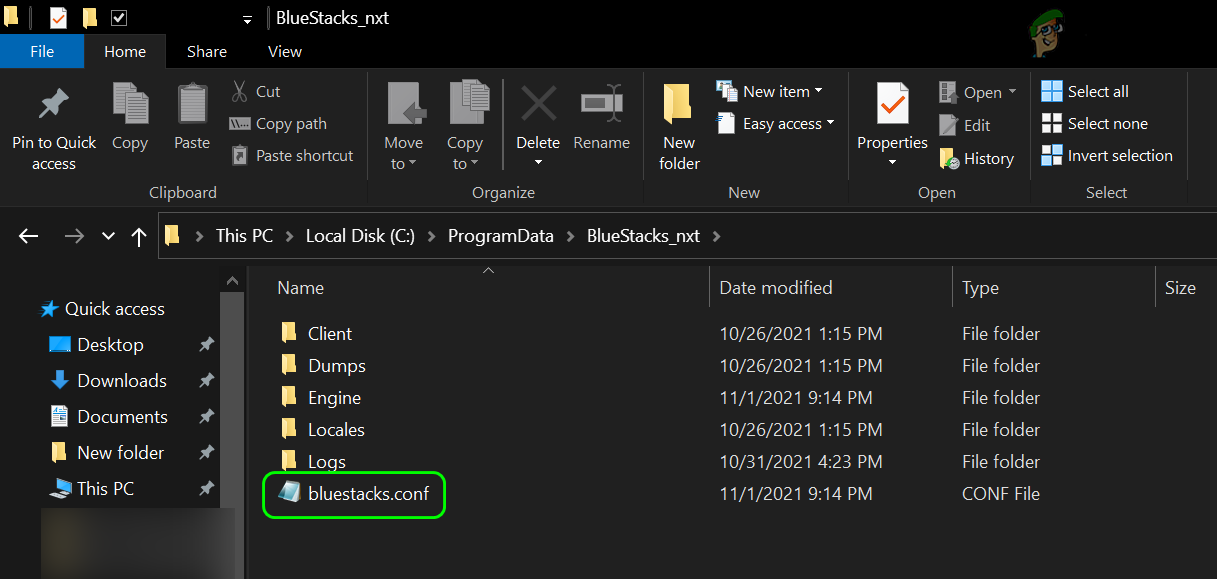
Open the BlueStacks.config File with the Notepad - Then search for root and alter the value of bst.feature.rooting to ane.
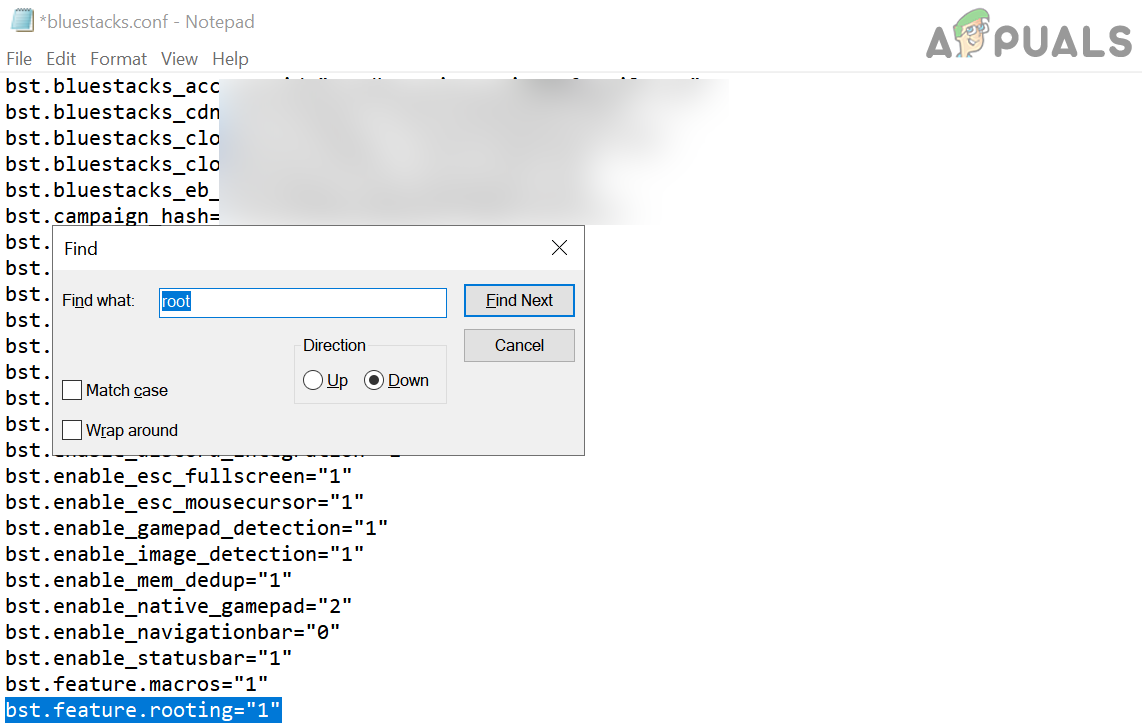
Set the bst.characteristic.rooting Value to 1 - Over again, search for root and modify the value of bst.instance.Nougat32.enable_root_access to one.
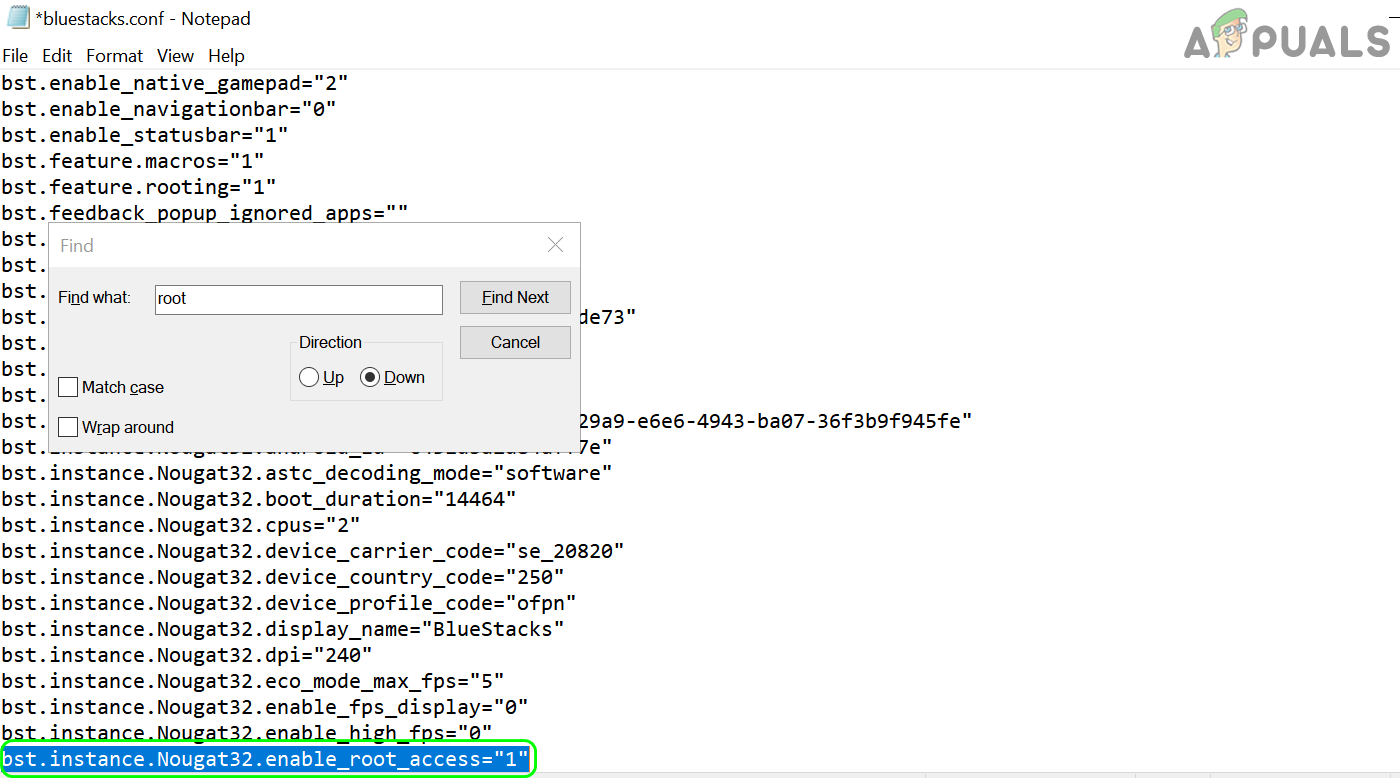
Set up the Value of bst.example.Nougat32.enable_root_access to i - If you have more than one instance of BlueStacks, change the value of all the values related to root to 1 from 0.
- Now save your changes and launch BlueStacks.
- One time booted, launch the Root Checker application and click on Verify Root.
- Hopefully, it will testify a successful root bulletin.
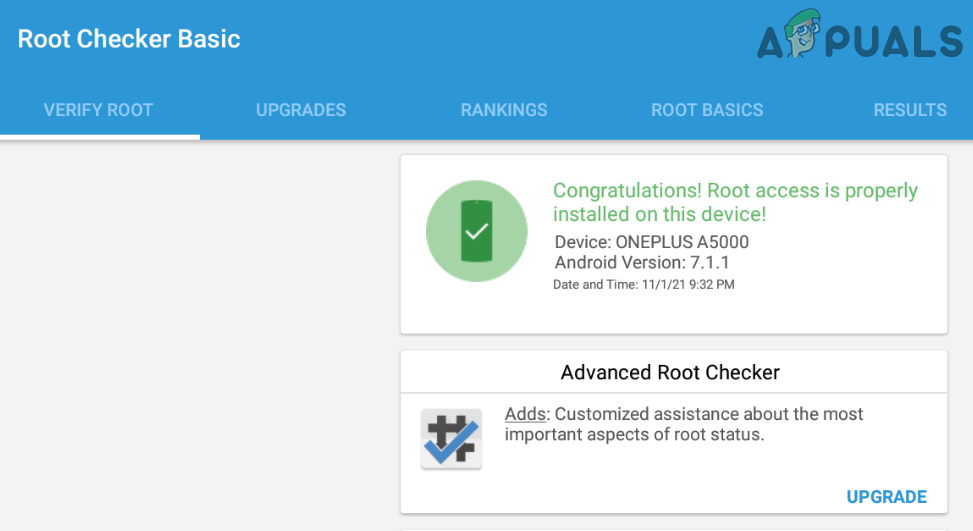
Root Checker Basic is Showing BlueStacks is Rooted
Once the BlueStacks are rooted, yous can try startup managers, custom animations, script managers, etc. (due east.k., Organization Tools Android app) to customize the BlueStacks installation. For best uses, you may search the web for the best apps for rooted Android.
Method two: Root BlueStacks by Ane Click Root Applications
For many users, who but want to utilise root privileges for just a unmarried app, the method discussed in a higher place volition suffice. If y'all do not want to edit the Config file, so you may use a one-click rooting awarding like OneClickRoot or KingRoot. That process is very simple, so, we are not discussing it deeply.
- Download APK files of any of the ane-click root apps like King Root or OneClickRoot from their websites and install the APK file in BlueStacks.
- And so launch the installed app and use the on-screen instructions to Root BlueStacks.
Method 3: Use the BS Tweaker Application to Root BlueStacks
For some of the advanced users, especially those users who need SuperSU, the to a higher place methods may non fulfill their requirements, although, the root may work, the installation of the SuperSU binary might require some extensive tweaking. The SuperSU can manually be installed but that will crave quite a piece of work, even for some experienced folks. If yous are interested in manually installing SuperSU, then you may wait into the XDA-developer forum mail for more details. Just there are other tools like the BS Tweaker that make this process very like shooting fish in a barrel. Keep in mind SuperSU manages the root permissions for the apps by showing the user a prompt to either permit the root access for an application or not.
Install the BS Tweaker Application
- Launch a web browser and navigate to the BS Tweaker website.
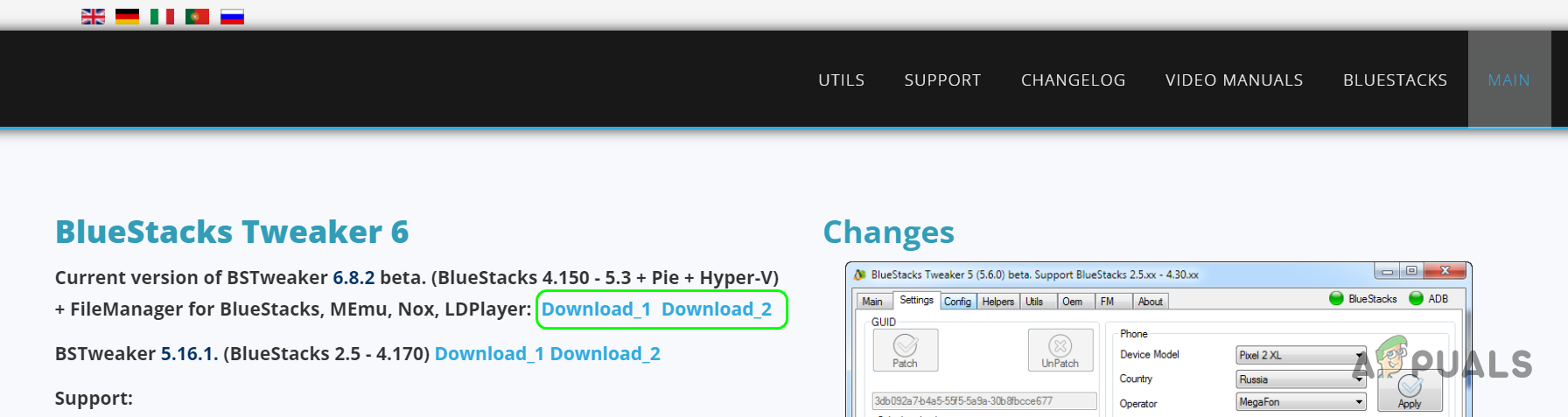
Download BS Tweaker - Now download the latest version of BS Tweaker and once downloaded, excerpt the downloaded zip.
- And so open the extracted nada folder and right-click on BlueStacksTweaker.exe.
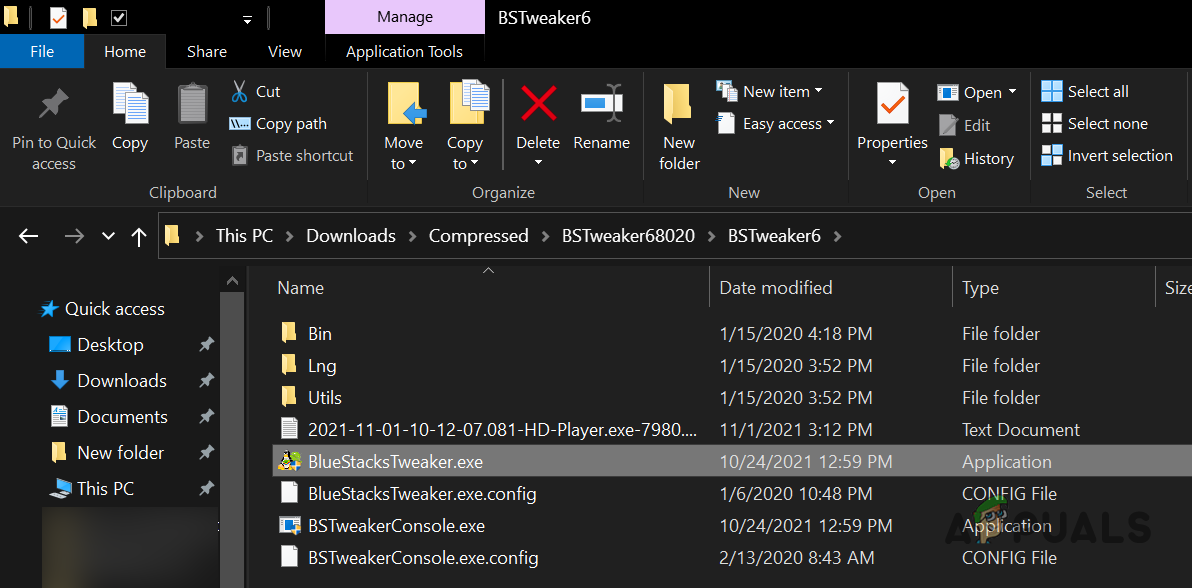
Open the BlueStackTweaker.exe as Administrator - Now select Run as Administrator and click Yes, if a UAC prompt is received.
Install the Root Checker Pro Application
The Root Checker Basic may work with the above methods, but for the BS Tweaker, the user may accept to use Root Checker Pro.
- Now, at the right bottom of the BS Tweaker, click on the BS Tweaker website URL.
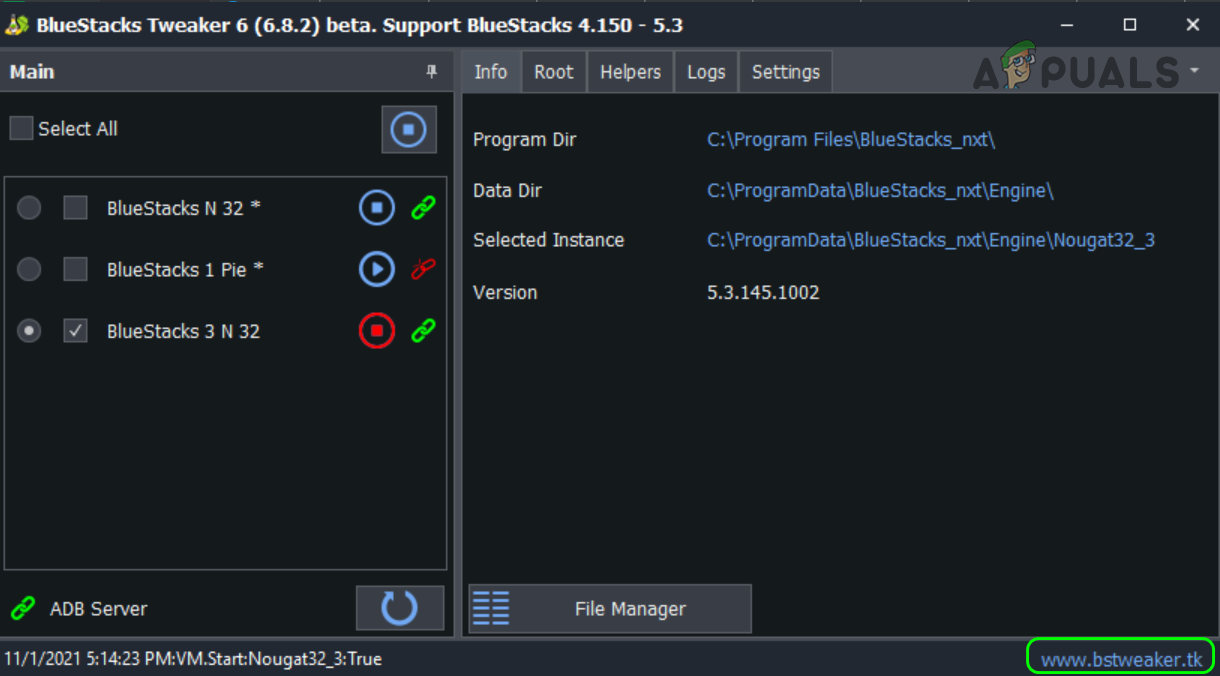
Open the BS Tweaker Website - A new browser window will open and the BS Tweaker website volition exist shown.
- Then, in the top bar, click on Utils, and under Manage and Check Root section, in front of Root Checker Pro, click on Download.
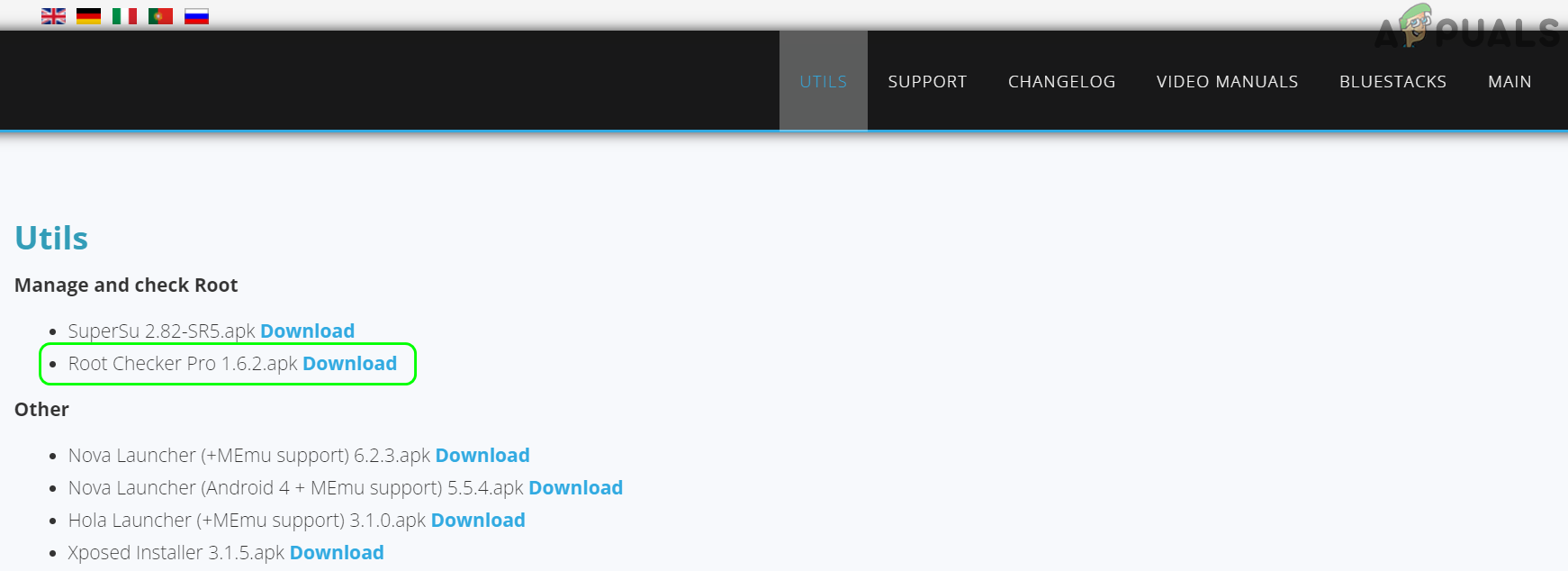
Download the Root Checker Pro from the BS Tweaker Website - At present save the file on your desktop and switch to the BlueStacks instance window.
- Then click on the Install APK push button in the right bar. You may also use try the shortcut key combination of Ctrl + Shift + B.
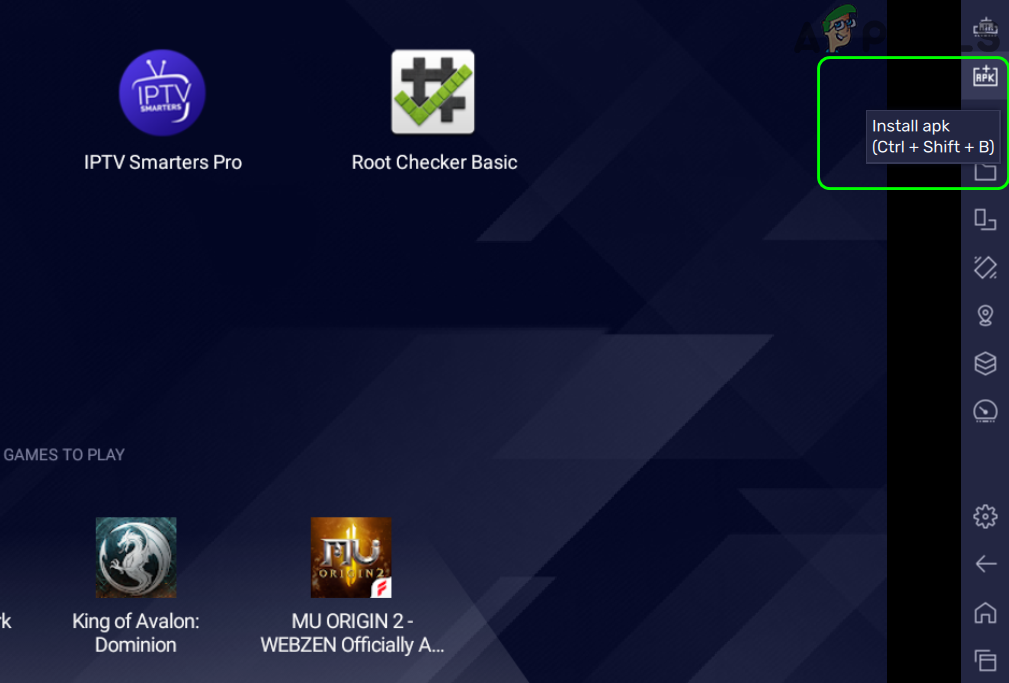
Click on the Install APK Icon in BlueStacks - Now double-click Root Checker Pro and await till the Root Checker Pro icon is shown in BlueStacks. Practice not launch the Root Check Pro application yet.
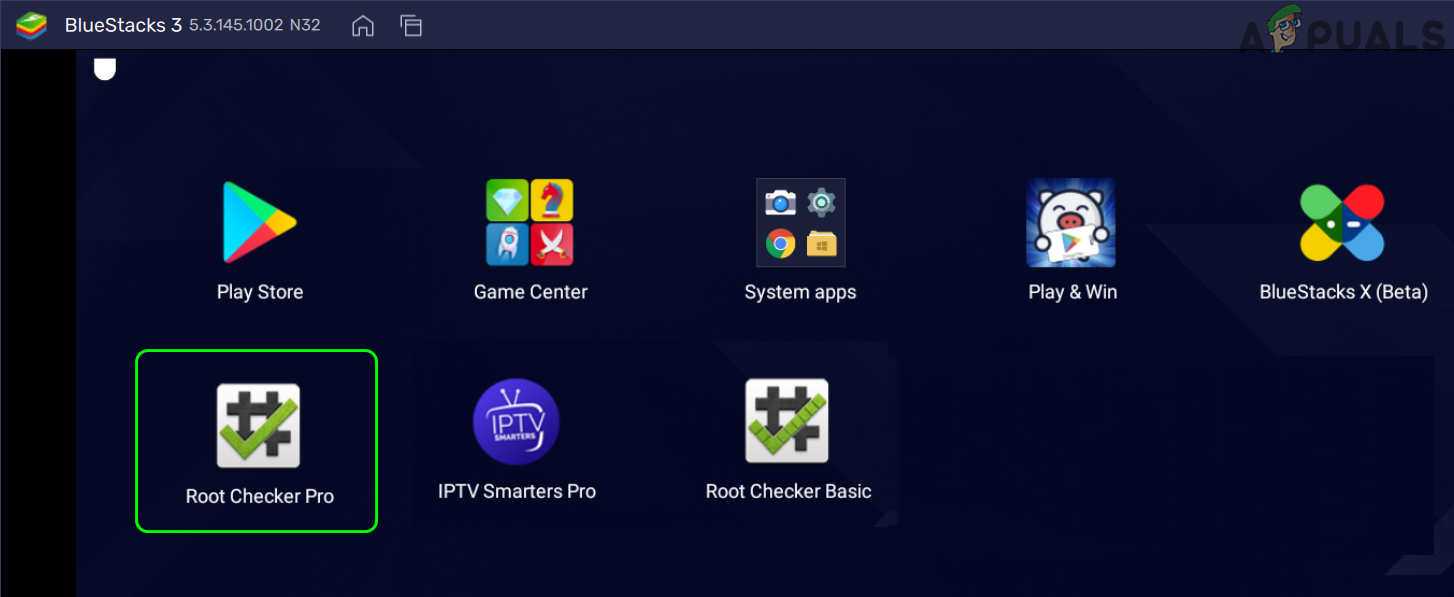
Root Checker Pro is Installed on BlueStacks
Root BlueStacks by Using the BS Tweaker Awarding
- Subsequently, switch to the BS Tweaker window and click on the cease push button in front of the BlueStacks instance (if started) that you want to root.
- Then, in the left pane of the BS Tweaker, select the BlueStacks instance that you desire to root by selecting the relevant checkbox.
- Now, in the right pane, caput to the Root tab and click on the Unlock push.
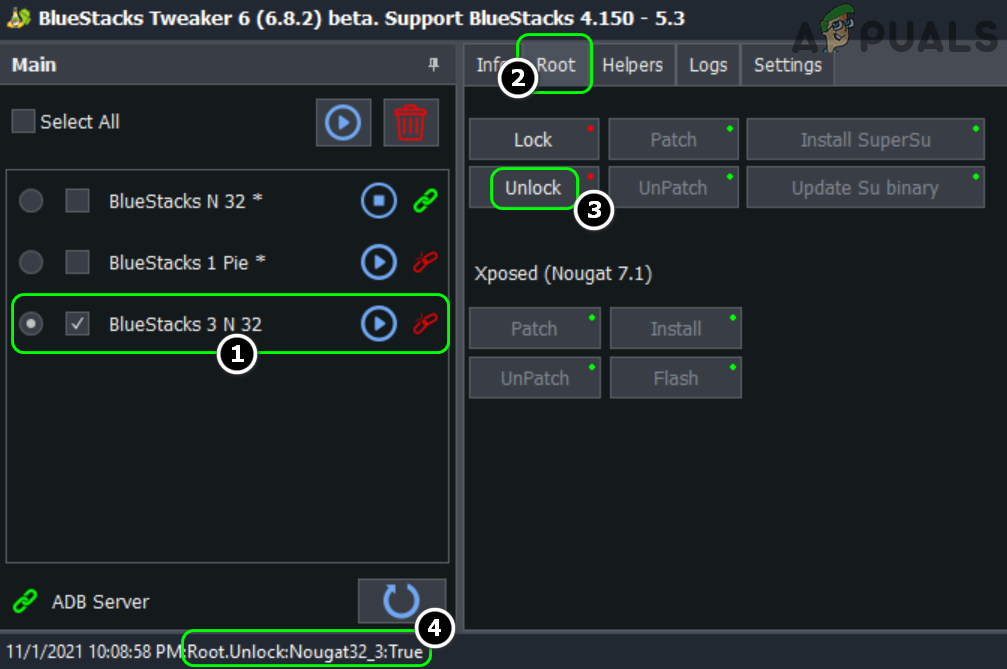
Unlock the BlueStacks Instance - And then confirm the warning and wait till the bottom bar shows the instance name with unlocking true bulletin.
- After, first the BlueStacks example by clicking the Play button and wait till the BlueStacks example is launched.
Install and Update the SuperSu Binary
- Now, switch to the BS Tweaker window and click on Install SuperSU.
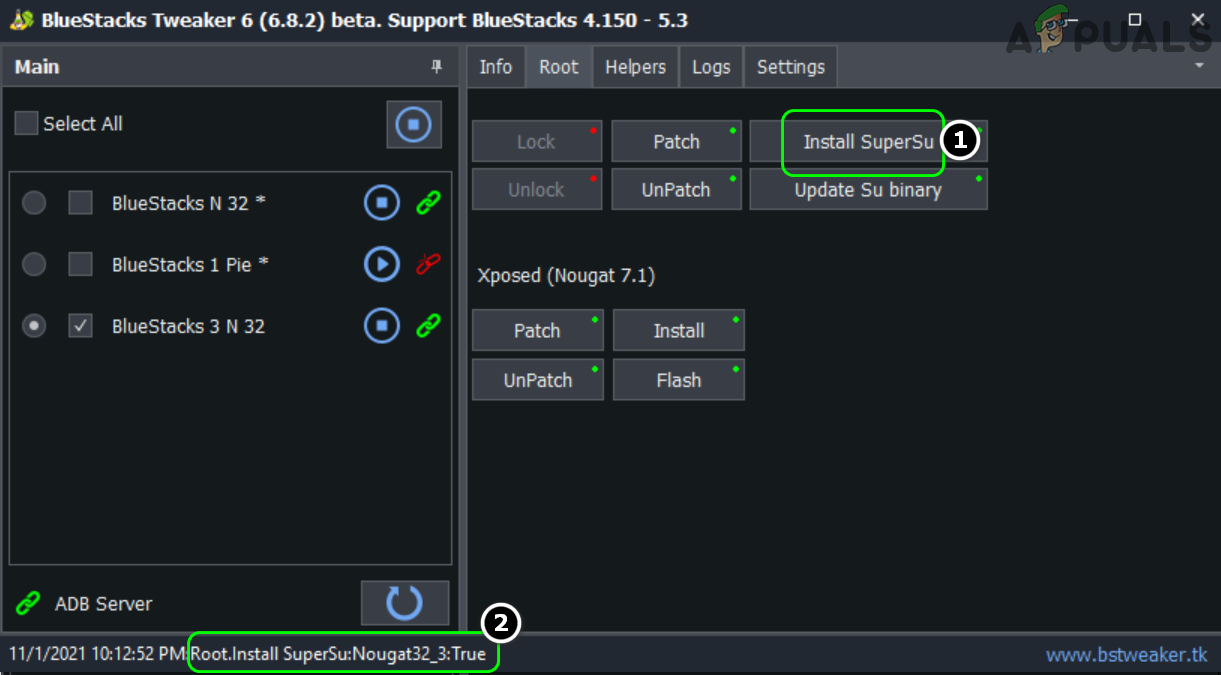
Install SuperSu on BlueStacks - Then switch to the BlueStack window and expect till the SuperSU app icon is shown on the window but do not launch it.
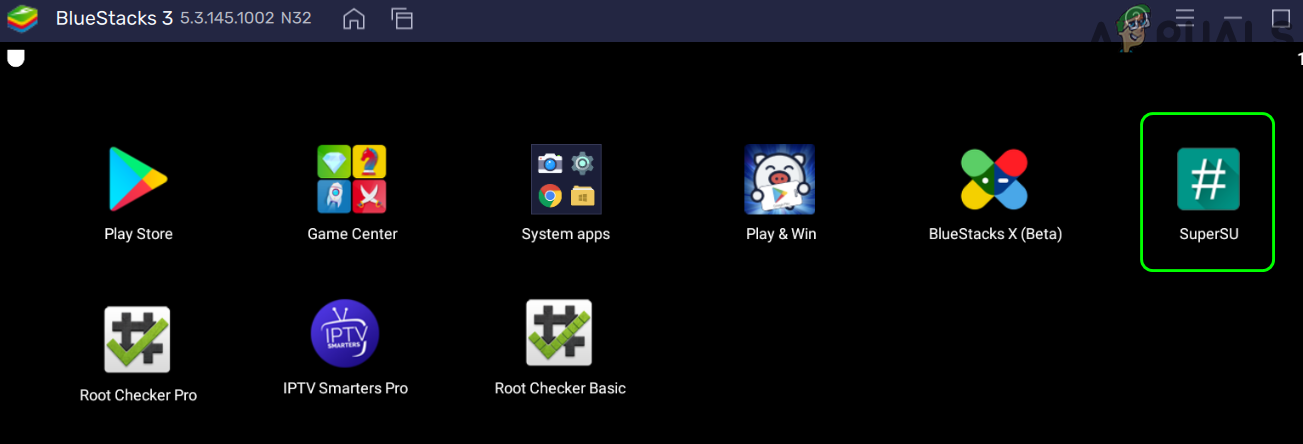
SuperSU Icon is Shown in BlueStacks - Now, switch back to the BS Tweaker window and cheque the lower condition bar for a message stating the installation of SuperSu is truthful.
- And so click on Update SU Binary and wait till the status bar shows the Updates SU Binary is true. The BlueStacks instance might close automatically.
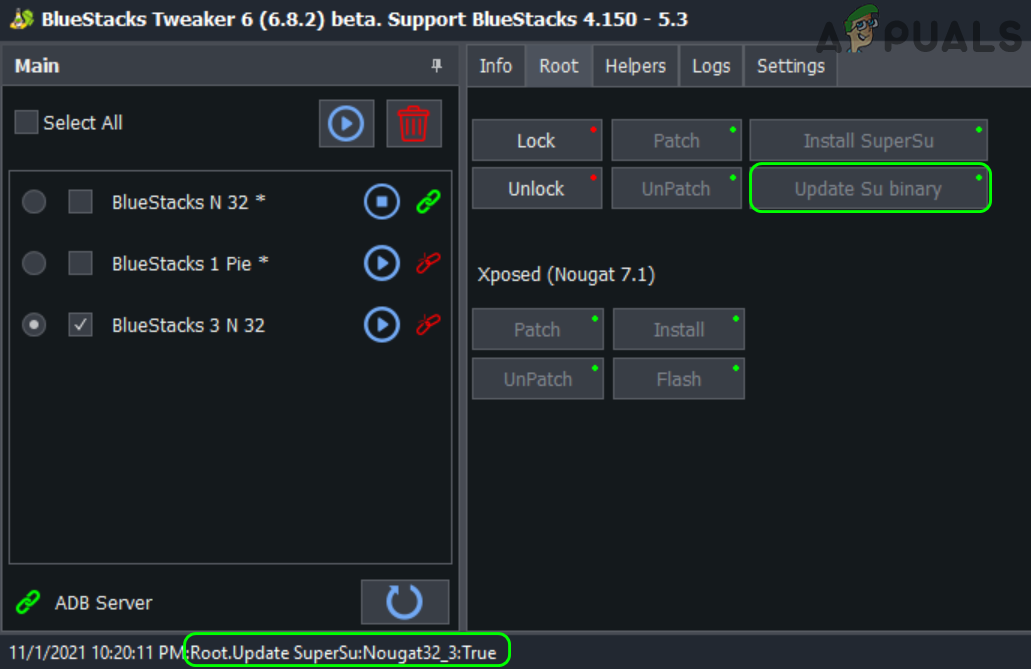
Update SU Binary Through the BS Tweaker - Again, click on the Play push button in front of the BlueStacks instance existence rooted and let information technology completely boot.
Verify BlueStacks Rooting by Using the Root Cheque Pro
- At present, in the BlueStacks window, launch the Root Checker Pro and have the agreement (if agreed to).
- Now click on Verify Root and if asked to, accept to Grant the root permissions to the Root Checker Pro.
- Then hopefully, the BlueStacks instance is completely rooted status volition be shown
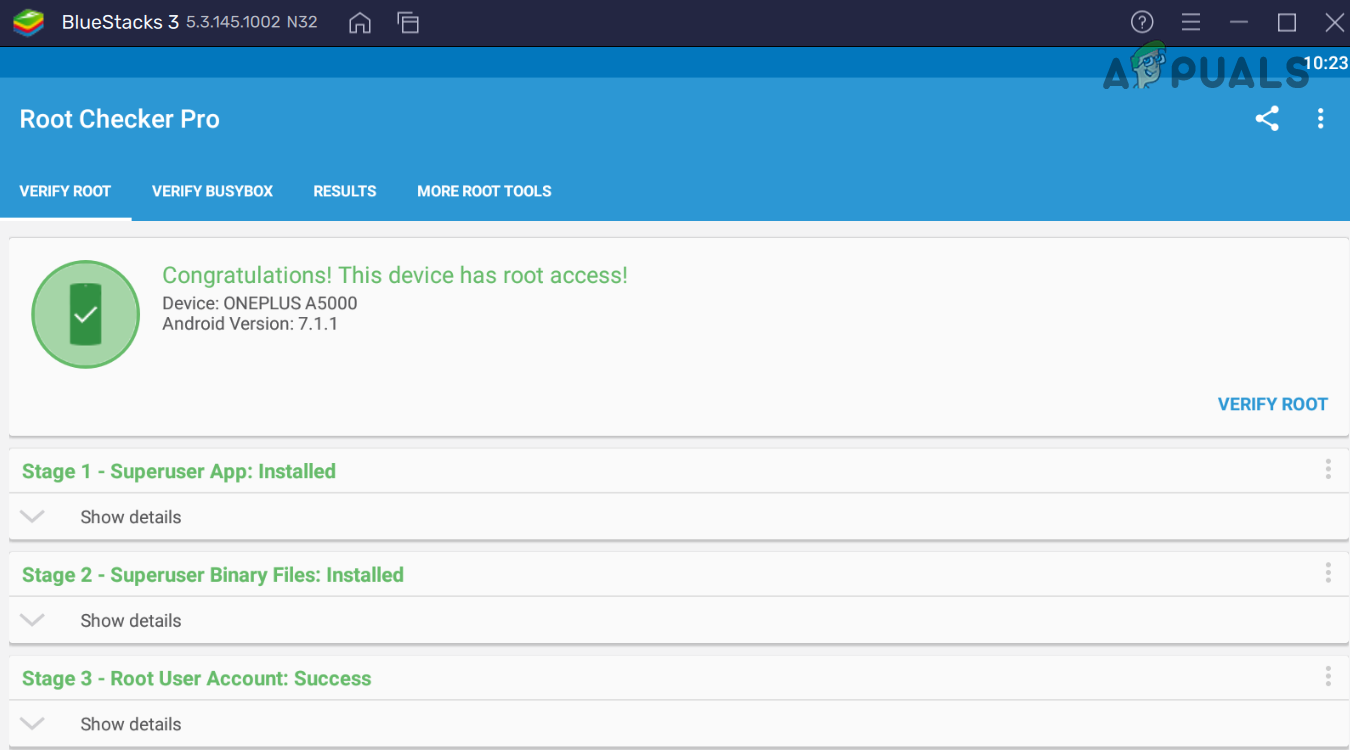
Root Checker Pro Shows Successful Root
Update the SuperSU Through the Latest APK
- Now, switch to the BS Tweaker window and click on the BS Tweaker URL almost the bottom right.
- So, on the Tweaker website, head to the Utils tab and download the latest SuperSu APK file.
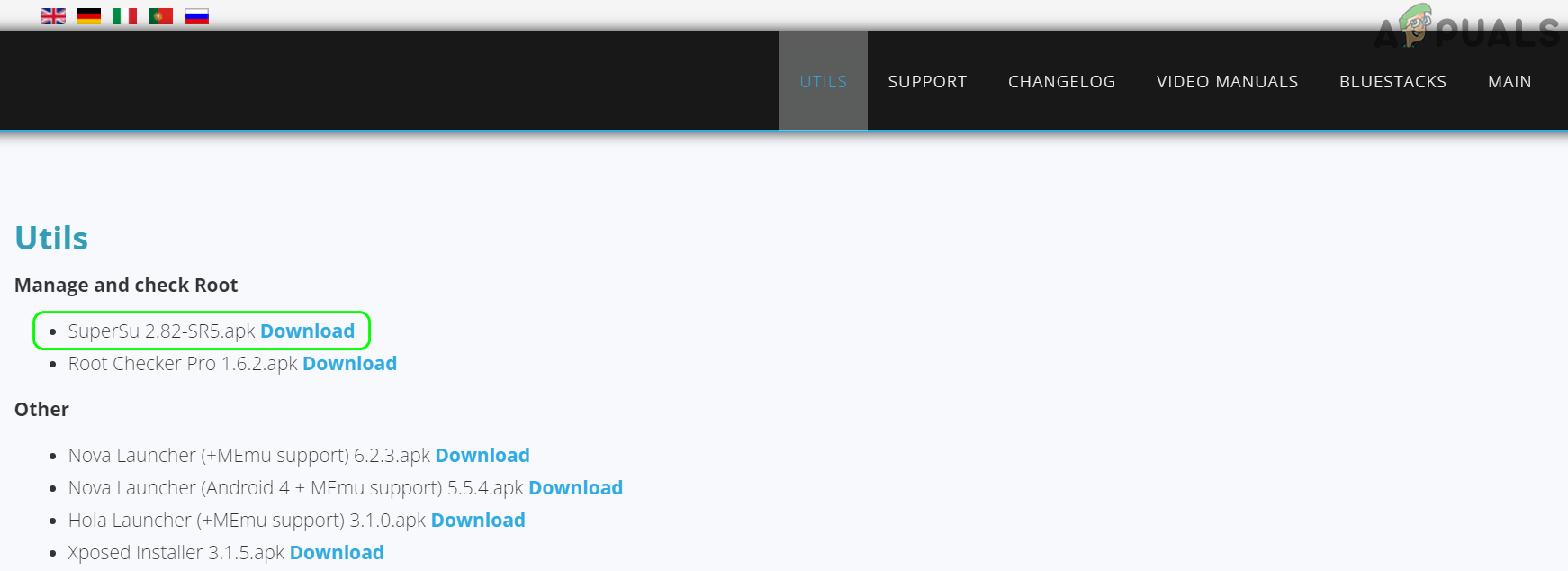
Download SuperSU from the BS Tweaker Website - Now salve the file on your desktop and switch to the BlueStacks window.
- Then click on the Install APK icon in the right bar and double-click on SuperSU APK.
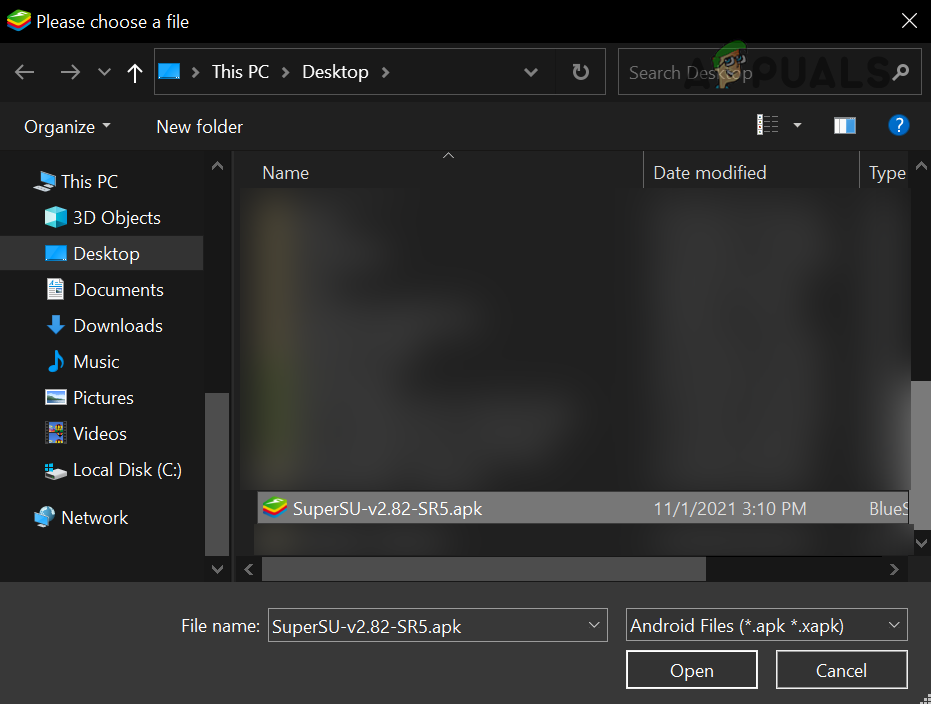
Install SuperSU in BlueStacks - Now click on the SuperSU icon on the Abode screen if information technology asks to exist updated, click Continue.
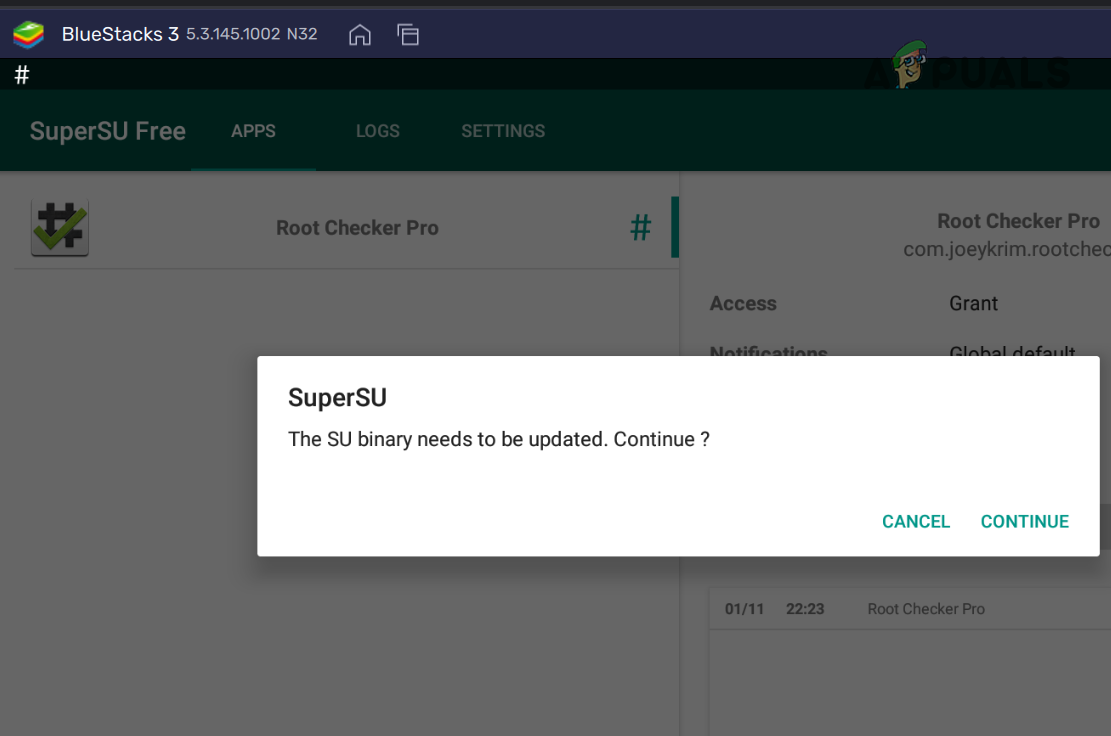
Click Continue to Update SuperSU Binary - Then select Normal (if using non-custom ROM) and when the SuperSU app is updated, click OK.
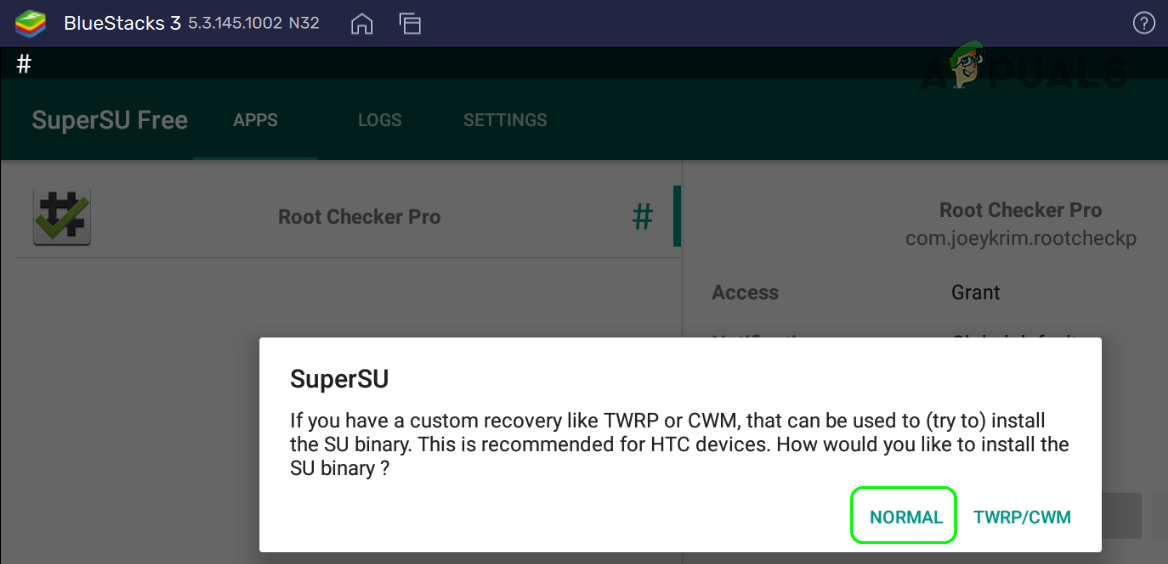
Install Normal SuperSU Binary - So select Reboot and wait till the BlueStackks instance is airtight.
- Now initialize the BlueStacks case from the BS Tweaker window.
- Once the BlueStacks case is launched, open the SuperSU application and bank check its different settings.
Install the Xposed Framework
The Xposed Framework provides a user with different modules that can requite a user a lot of utilities to customize the Android and BlueStacks.
- Switch to the BS Tweakers application and outset the BlueStacks case that was rooted earlier.
- Now, select the BlueStacks example in BS Tweaker and head to the Root tab.
- Then, in the Xposed section, click on Patch and wait till the condition bar shows the Xposed patch is true.
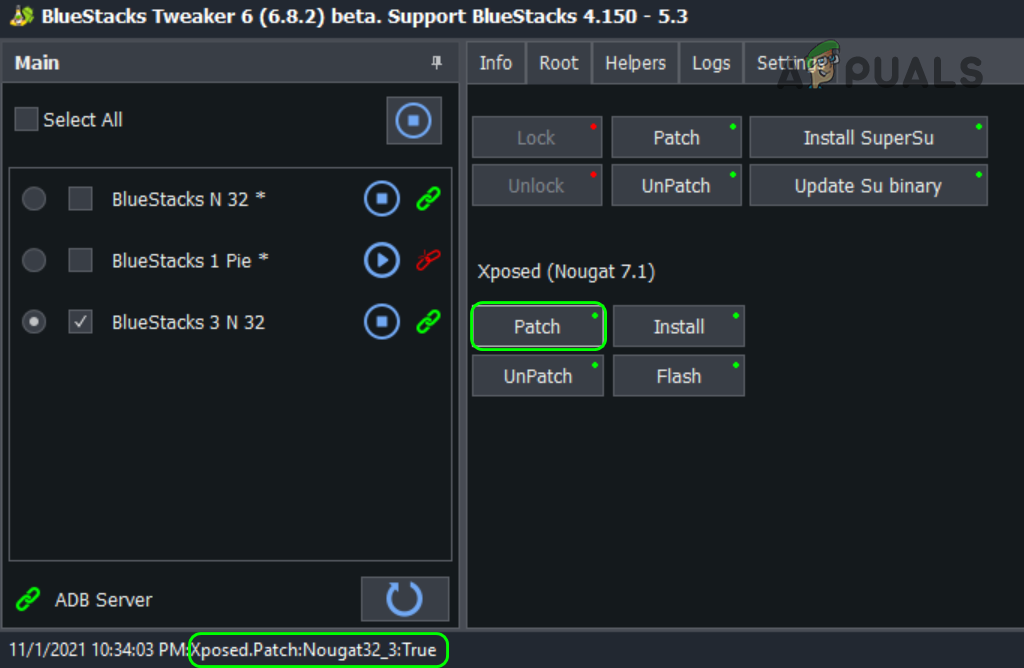
Patch Xposed in BlueStacks - Now click on Install and wait till the status bar shows the Xposed installed message.
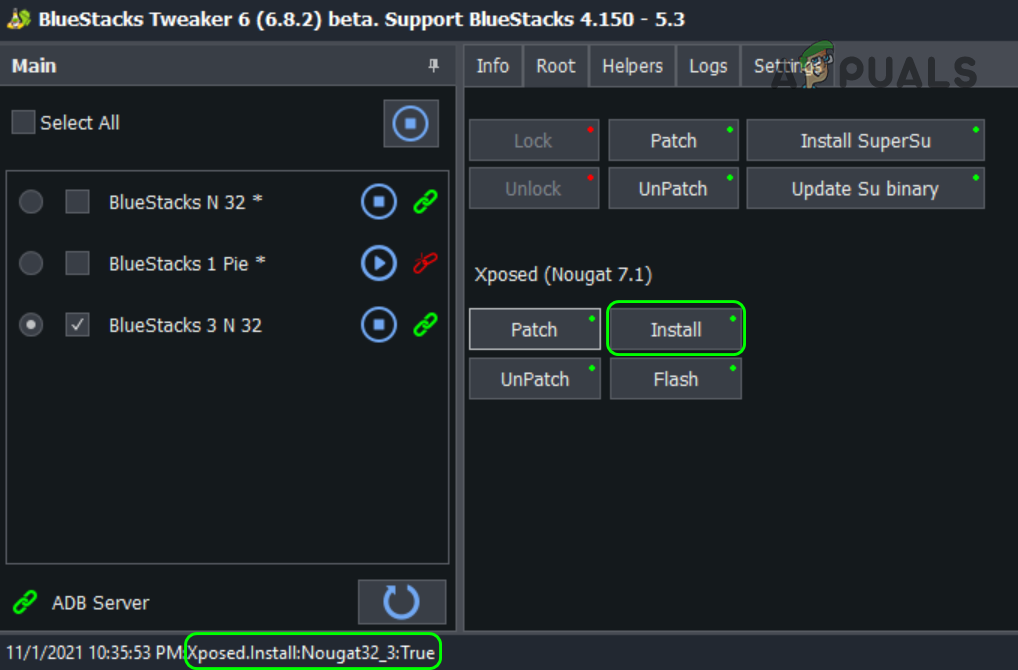
Install Xposed in BlueStacks - So click on Flash and await till the Xposed wink True message is shown.
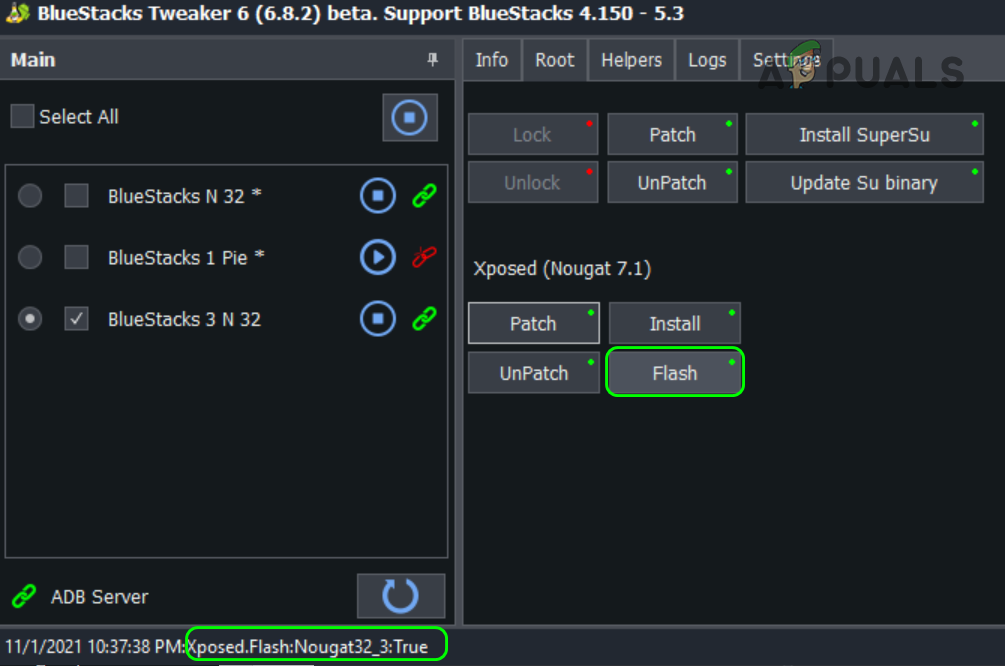
Flash Xposed in BlueStacks - Now switch to the BlueStacks window and hopefully, you lot will note the Xposed Installer icon but do not launch it.
- And then close the BlueStacks instance and afterward, launch information technology from the BS Tweaker application.
Apply the Xposed Installer to Take Advantage of Rooted BlueStacks
- Once the BlueStacks instance is launched, open Xposed Installer and click OK on the warning dialogue box.
- At present make certain the Xposed Condition is set up to Xposed Framework is active.
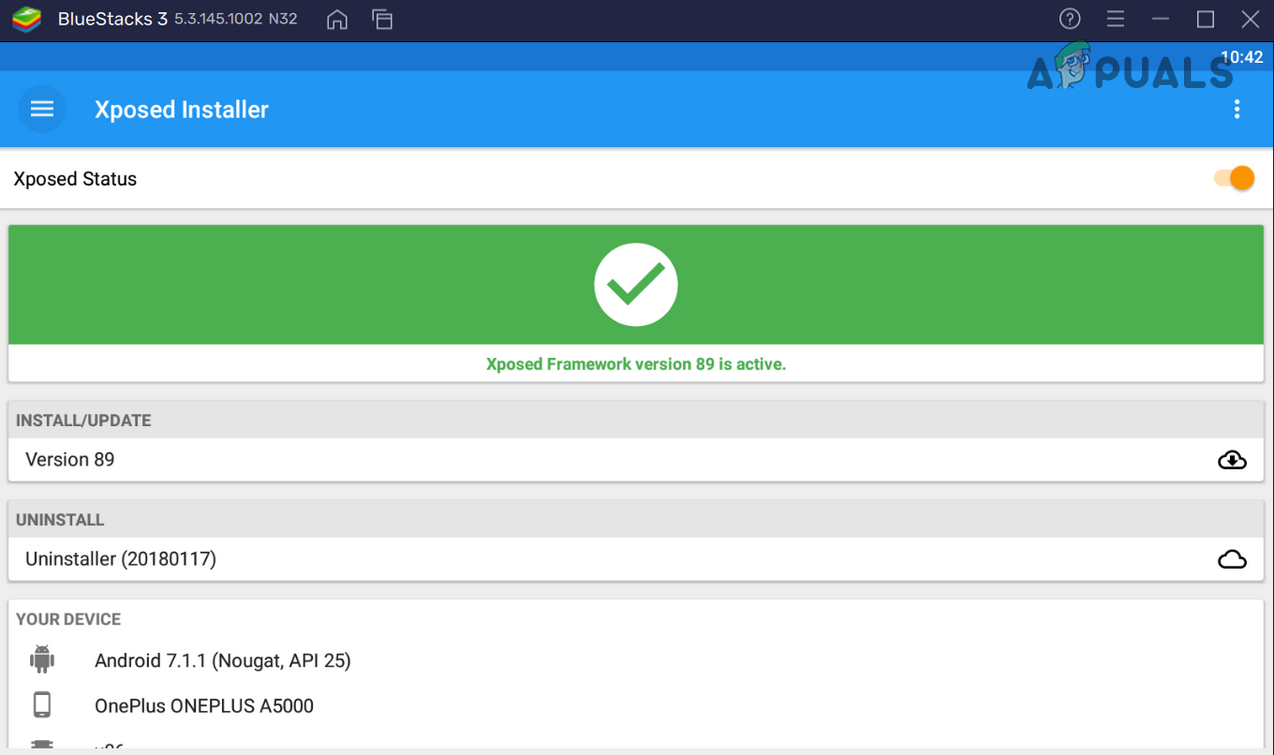
Xposed Status is Active - So click on the hamburger menu in the top left and select Download.
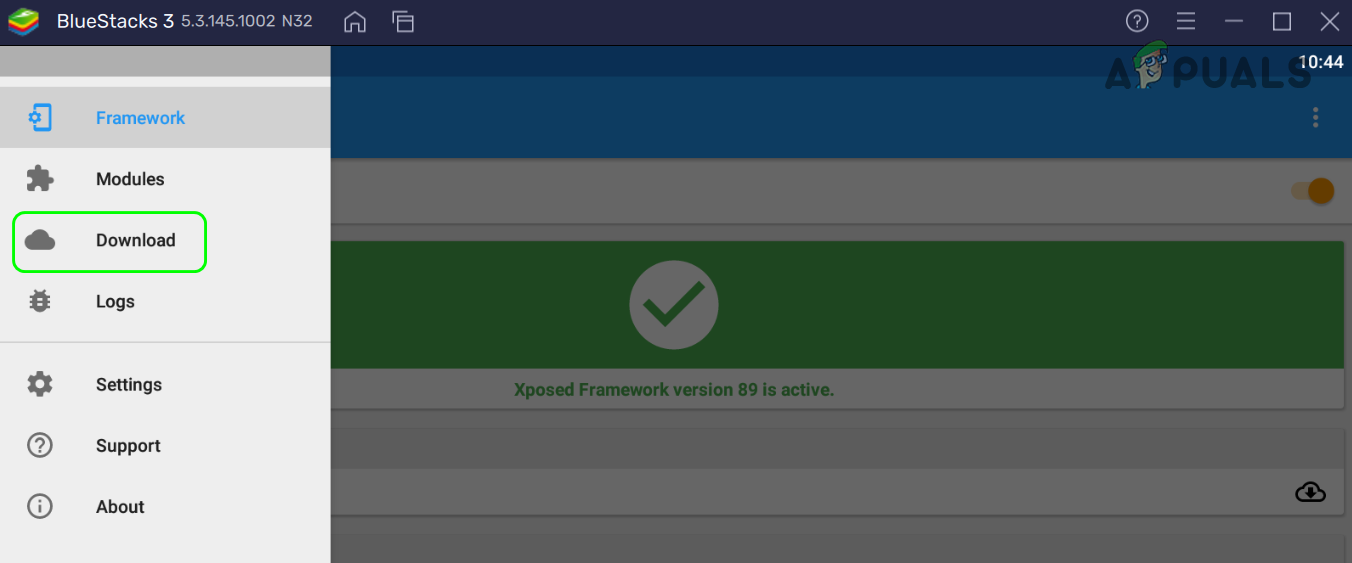
Head to Download in Xposed Menu - Now click on the search icon and search for BootManager (without space).
- Then select BootManager and head to the versions tab.
- Now in the box of the well-nigh recent version, click on Download, and once downloaded, click on Install. Then Confirm to Install BootManager.
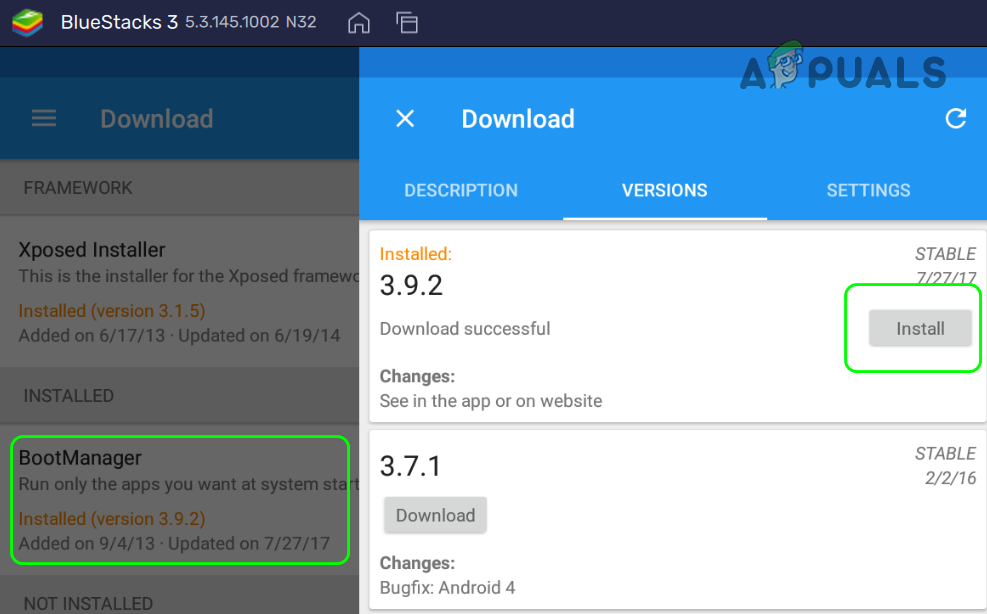
Install BootManager in Xposed Framework - Once installed, shut the BlueStacks instance and start it from BS Tweaker.
- Once the BlueStack instance is launched, open the Xposed Installer and expand its Bill of fare.
- Now navigate to the Modules tab and checkmark the BootManager app.
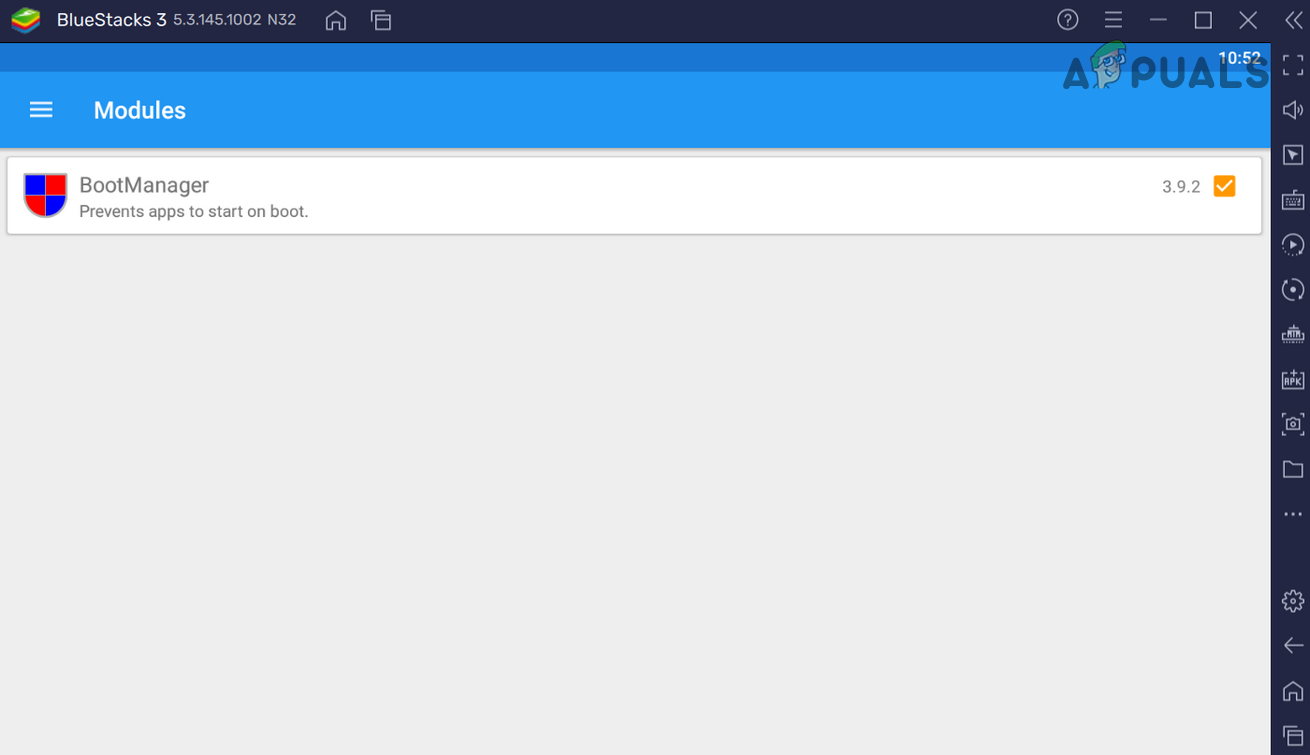
Activate BootManager in Xposed Framework of BlueStacks - Then restart the BlueStack instance and upon restart, open BootManager.
- Now select the apps that yous do not desire to start at the BlueStacks startup (similar IPTV Smarters Pro).
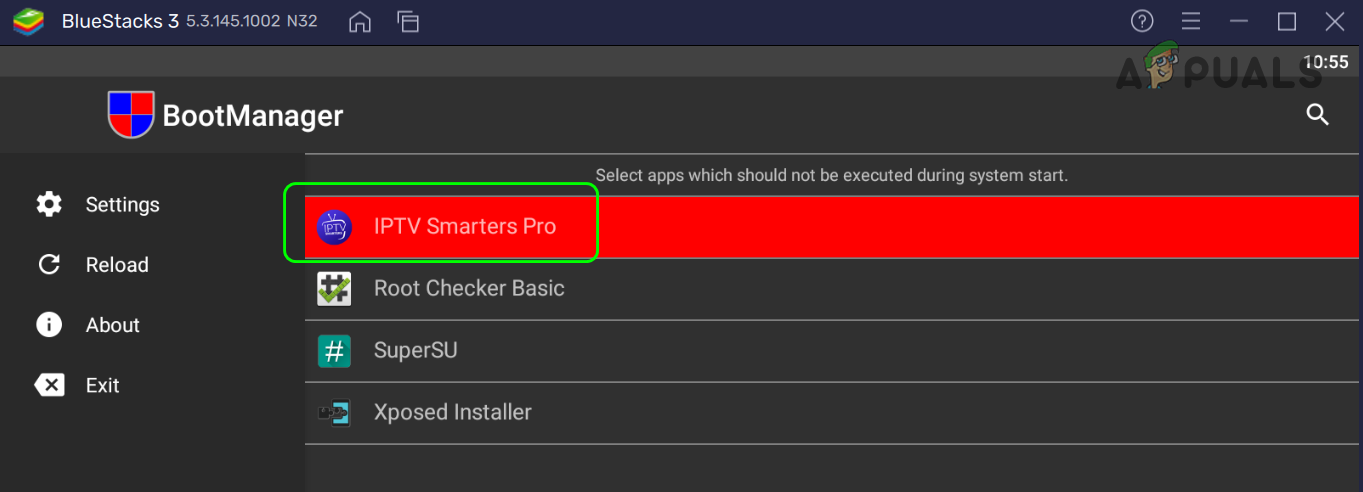
Select IPTV Smarteres Pro in BootManager to Terminate it at the BlueStacks Startup - Now restart BlueStacks and the selected app will not start with BlueStacks.
So dear readers, in this fashion, you can use different modules of the Xposed installer to tweak the BlueStacks instance. Likewise, there are plenty of other apps for rooted BlueStacks (the Cyberspace is your best friend) to take full reward of the rooting procedure.

Source: https://appuals.com/root-bluestacks/
0 Response to "Bluestacks Oh No! Your Login Temporarily Failed"
Post a Comment