Commentary: Afghanistan is not ready for foreign troops to leave
CANBERRA: Despite ongoing peace negotiations betwixt the U.s.a. and the Taliban, the bloody conflict in Afghanistan continues to take a heavy toll on the state's people.
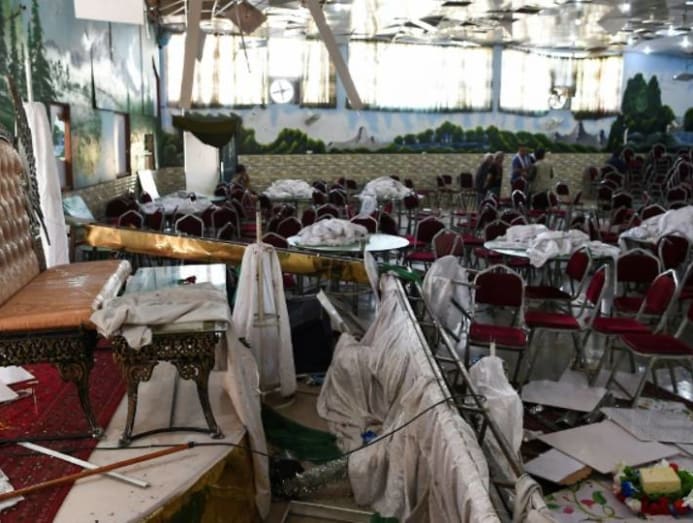
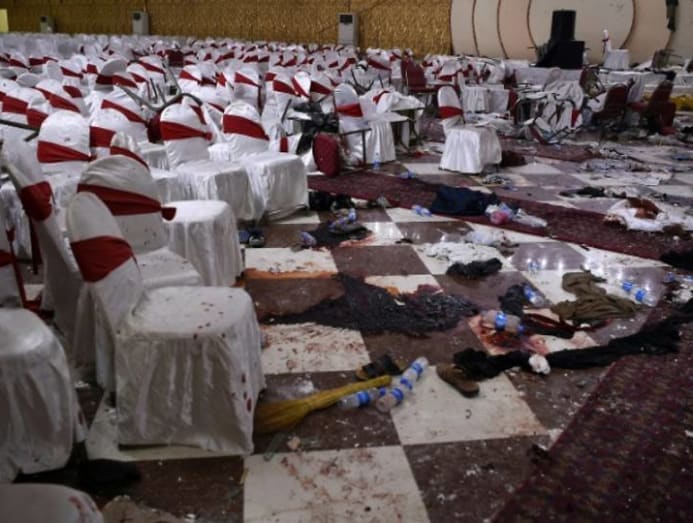
The recent suicide bombing past the Khorasan branch of the Islamic Land at a wedding in Kabul, which killed more than than threescore and injured shut to 200, is a stark reminder of Transitional islamic state of afghanistan's poor security state of affairs.
Information technology also shows that the Taliban are non the only armed opposition fueling the conflict. A The states-Taliban peace pact is therefore unlikely to bring any respite.
READ: The Big Read: Battered in the Heart East, Islamic State eyes Southeast Asia as side by side terrorism hotspot
EXITING AN UNWINNABLE WAR
The US-Taliban negotiations in Doha – in which the Afghan government is not a participant – are comparable to ii previous peace processes.
The Paris talks that resulted in the January 1973 peace treaty between the US and North Vietnam, and the negotiations that led to the 1988 Geneva Accords, signed by the Afghan and Pakistani governments with the Soviet Union and the U.s.a. acting equally guarantors.
These ii agreements were designed to enable the US and the Soviet Union to exit with "honour" from wars they could non win, by bringing about, respectively, the "Vietnamisation" and "Afghanisation" of those conflicts. Both agreements failed to achieve their objectives.
By 1975, Soviet-backed North Vietnamese forces had overrun Due south Vietnam, humiliating the United states. And in 1992, the US-supported Afghan Islamic resistance forces, the mujahideen, brought well-nigh the collapse of the Soviet-installed communist regime in Kabul.
WHY Afghanistan HAS FARED WORSE
Whereas the North Vietnamese soon succeeded in uniting their country and restoring peace, all the same, Afghanistan has fared much worse.
The socially and politically divided mujahideen shortly turned their guns on one another. And Islamic republic of pakistan took the opportunity to advance its regional interests by nurturing the extremist Taliban, who in 1996 to 1998 conquered most of Afghanistan and subjected it to strict theocratic rule.
The Taliban in turn harboured al Qaeda, which carried out the Sep 11, 2001, terrorist attacks on the The states. That prompted America, backed by its NATO and non-NATO allies, to intervene in Afghanistan the post-obit month with the aim of destroying al Qaeda and dislodging the Taliban government.
The US-led forces quickly dispersed al Qaeda's leadership and concluded Taliban rule, simply failed to defeat either group decisively.
The Taliban and elements of al Qaeda staged a comeback within ii years of the United states of america intervention, and accept tied down American and allied forces in a depression-grade but staggeringly costly insurgency e'er since.
THE Volition TO WITHDRAW
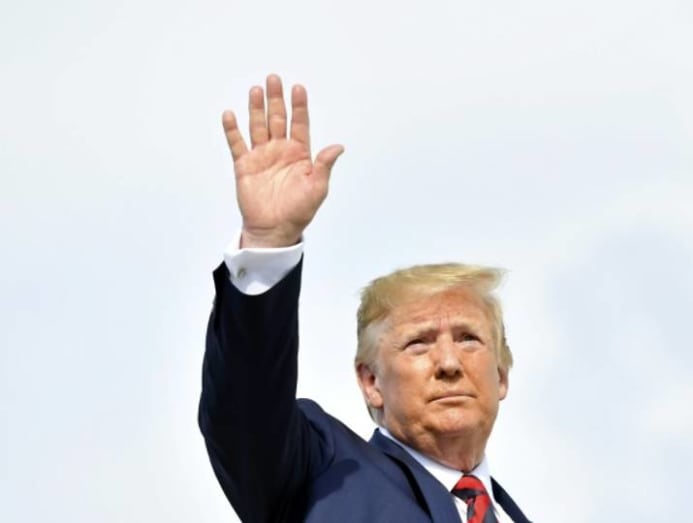
Now, after nearly two decades of fighting, United states President Donald Trump desperately wants to disentangle America from a seemingly unwinnable war – preferably through a political settlement with the Taliban.
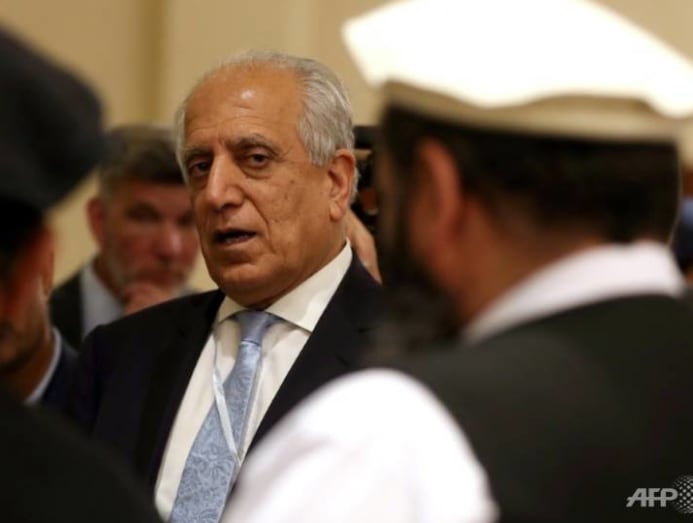
Trump's Special Representative for Afghanistan Reconciliation, the Afghan-American Zalmay Khalilzad, has been engaged since September 2022 in shuttle diplomacy, in an eerie parallel with the unsuccessful efforts of and then-U.s. Secretary of Country Henry Kissinger to bring almost peace in the Middle Eastward post-obit the 1973 Arab-Israeli State of war.
Khalilzad has just begun his 9th round of negotiations with Taliban representatives in Doha.
Separately, he has had numerous meetings with the Afghan regime and non-governmental leaders, as well as with regional and international actors – only not Iran, with which the The states is locked in a cycle of deepening hostility.
READ: Commentary: The fight in Syrian arab republic isn't just about defeating the Islamic State
He has focused on four interrelated objectives: A timetable for the exit of all foreign troops currently in Afghanistan; a commitment from the Taliban to forestall hostile acts being launched confronting the Us from Afghan soil; directly negotiations between the Taliban and the Afghan government, which the Taliban regard as "illegitimate" and a "boob"; and a ceasefire across Transitional islamic state of afghanistan.
BREWING COMPLICATIONS
But although Khalilzad may finally manage to reach agreement with the Taliban regarding the beginning ii aims, there is no guarantee that America's partner in the peace talks volition aid to realise the remaining two.
The Afghan government's weakness and internal divisions would requite the Taliban the upper hand in any ability-sharing arrangement, particularly after US and allied forces have left.
And it is very doubtful that the Taliban, whether in power or every bit a partner in power, would be able to control other armed opposition groups, most importantly IS, or enlist the back up of a cross-department of Afghanistan's various population.
The Taliban are ethnic Pashtuns, hailing specifically from the Ghilzai tribe to which Afghan President Ashraf Ghani and many around him belong. Neither the Ghilzais nor the rival Durrani tribe of former President Hamid Karzai are much trusted past non-Pashtun indigenous groups, who (though themselves divided) collectively form the largest share of Afghanistan's population.
To complicate matters farther, all Afghan ethnic groups take extensive cross-border ties with the country'south neighbours.
Atmospheric condition ON THE GROUND
Meanwhile, IS has loyalty to no one within Transitional islamic state of afghanistan. The group became operational in 2022 and is said to accept nearly 2,000 fighters (including some Taliban defectors), who are dedicated to creating disruption and anarchy.
They take been responsible for horrific attacks across Transitional islamic state of afghanistan, especially in Kabul and by and large on noncombatant targets.
READ: Commentary: Who bears responsibility for the children of Islamic State?
Any withdrawal of US and allied forces during Trump's current term, whether phased or otherwise, must exist based on conditions on the basis. Otherwise, the consequences will exist disastrous.
Considering of the mode the peace procedure and the state of affairs in Transitional islamic state of afghanistan accept evolved, a jerky foreign-troop withdrawal would lead to a fiasco similar to those generated by the earlier Soviet retreat from the country and past the U.s. withdrawal from Vietnam.
To avert such a ending, the U.s. and its allies need to remain in Afghanistan for at least another decade.
But Trump is in a hurry, and thinks that a strong CIA presence in the country will manage to do what Western forces take been unable to attain.
More likely than not, that will prove to be wishful thinking.
Amin Saikal, Professor of Political Science at the Australian National University, is the author of Zone of Crisis: Afghanistan, Pakistan, Iran and Iraq, and co-author (with James Piscatori) of Islam Across Borders: The Umma in World Politics.
Source: https://cnalifestyle.channelnewsasia.com/commentary/commentary-afghanistan-not-ready-foreign-troops-leave-275776
0 Response to "Commentary: Afghanistan is not ready for foreign troops to leave"
Post a Comment